0
 0
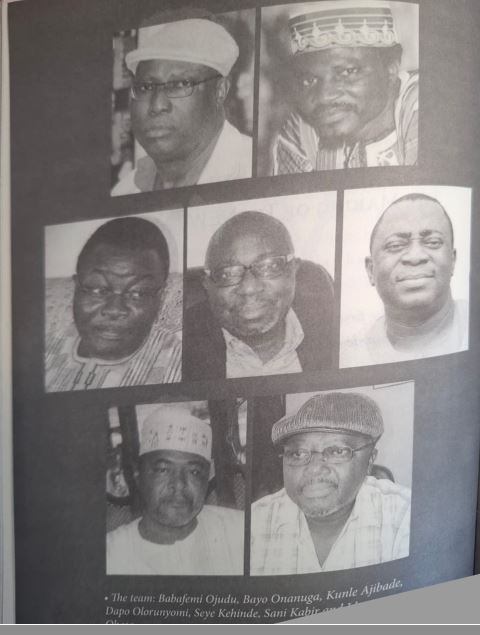
The entire story was expertly woven together by Dapo Olorunyomi, a master of the craft with a talent for in-depth analysis and elegant prose. When the magazine hit the streets, it was like a firebrand—everyone was talking about it; a devastating critique of Babangida’s regime, which had lost much of its credibility due to the Presidents constant backtracking on his promise to hand over power.
Then came the Tuesday seal-off drama.
Abiola’s bakery, which produced the popular Wonder Loaf, along with the other Concord titles— National Concord, Sunday Concord, Weekend Concord – and several other enterprises housed within the premises, all became casualties of the trouble we at African Concord had stirred. The warnings from editors of the more peaceful’ publications that “Femi Ojudu and Bayo Onanuga will get us all into trouble” had come true. Some whispered this behind my back; others were bold enough to say it to my face. My next move only exacerbated the situation.
Outraged by the shutdown, I headed straight to the chambers of Chief Gani Fawehinmi, the renowned human rights lawyer. “They have no right to do this. I want to sue the Federal Government!” I declared angrily. Gani, with his characteristic calm, studied me, then asked if I was truly certain about taking this step. I assured him I was determined. “Femco, you know they will come after you?” he warned. With a firm resolve, I replied that I was ready. He pointed a finger at me and said, “Don’t waste my time on this case and then come back halfway to tell me that Abiola asked you to withdraw it.”
“Nobody can stop me,” I affirmed.
Gani, always excited about such cases, summoned his team of lawyers and set them to work. By the next day, he had personally filed the case in court and issued a press statement that made headlines across the country. This development prompted an immediate summons from Abiola, and I went to see him.
Usually, he would greet me with a jovial “Jagun” (fighter), but this time he was fuming as he saw me approach. “Who do you think you are? Who is your father? Who gave you the authority to go to court? Is this your business? What is wrong with you! What impudence! You went and wrote that nonsense in my newspaper, and now they’ve sealed up my businesses.”
“After a meeting with Nobel laureate Prof. Wole Soyinka, Abiola remarked that we shouldn’t mind Soyinka, whom he claimed had squandered his Nobel Prize money on wine and was now looking for someone to fund his taste. I found this comment grossly inappropriate”
“Calm down, Chief,” I repeatedly tried to pacify him. Eventually, his anger subsided, and I explained in a calm voice, “Chief, I did not go to court in your name, nor in the name of the company. I went as a journalist who has the right to inform and be informed and who has been unlawfully deprived of that right.” His anger flared again as I quoted the Journalism Code of Conduct, the Nigerian Constitution, and the United Nations Act that guarantees freedom of the press and speech. I had never seen him this angry since I became close to him as Chairman of the Concord Chapel of the Nigeria Union of Journalists. He ordered me out of his house.
A few days later, Abiola swallowed his pride and sent a handwritten letter to Babangida, apologizing for what he described as our exuberance and appealing for the premises to be reopened. To Abiola’s dismay, Babangida leaked the letter to the Daily Times, which published it on its front page the next morning. Despite the apology, the facility remained sealed.
In a bid to appease the General, Abiola even made himself the Master of Ceremony at the 40th birthday party of the wife of Col. Halilu Akilu, the powerful security chief in Babangida’s regime.
After my unsuccessful meeting with MKO, the publisher summoned me again, this time with African Concord Editor, Bayo Onanuga. Unlike our previous encounter, Abiola’s tone was now soft and pleading. “Please, I need my companies reopened. I know you guys are telling the truth, but they’ve given me a condition that you must apologize publicly and withdraw the court case.” He tried to flatter us, saying, “You’re fine writers; just write a paragraph each saying you regret your actions and are sorry.” Bayo and I exchanged glances, silently communicating our thoughts. We responded that we would return with the letters the next day.
On our way out, I told Bayo I had no intention of apologizing or withdrawing the case. Bayo agreed, saying there was no way he would ever apologize. After weighing the consequences, we decided instead to submit our letters of resignation. The next day, we returned to Abiola’s residence but did not wait to see him. We dropped off our resignation letters and quickly left. The next morning, the news broke in all the newspapers: “African Concord Editors Resign.” Moments after our resignation became public, our colleagues—Kunle Ajibade, Dapo Olorunyomi, Seye Kehinde, and others—also tendered their resignations.
As we headed home, one question weighed heavily on our minds: “What next?” Bayo mentioned that he would retrieve his passport and relocate to London. I declared that I was done with journalism and would venture into something else, though I had no idea what that would be. I knew, however, that no newspaper or magazine would hire me due to my radical tendencies.
BY SOME ACT OF FATE, on the morning our resignation became public, my good friend from our University of Ife days, Debo Adeleke—now a fish merchant and later a legal practitioner—appeared at my house. “Femi, I really admire what you did. I wouldn’t expect anything less considering our training and orientation at Ife,” he said. “What can I do for you now that you’re jobless?” After thinking it over, he decided to give me some money for upkeep and to pay my rent for six months. He then invited me to join him in his fish business.
That marked my entry into the fish trade. I joined Debo and started traveling around to market fish. I operated from the fish depot in Isolo and visited Ibadan, Abeokuta, and Akure to secure cold-room rentals. Unfortunately, my venture into the frozen fish business was a disaster, which I will recount in detail in my autobiography.
Shortly after Debo left, I visited Bayo to see how he was faring and to discuss our next steps. When I arrived at his apartment on Mojisola Street, Agege, the maid informed me that Bayo was in the bathroom. I inquired after his wife, Toyin, who was in the bedroom but did not come out to greet me. This was unusual, especially given the recent drama surrounding us. I sensed trouble.
As I sat in the living room, I noticed a paper on the coffee table. Out of journalistic curiosity, I picked it up. It was a draff letter from Bayo to Abiola, apologizing for his resignation and withdrawing it. I was stunned and confused. Without saying goodbye, I left the house and drove back to my apartment in Ketu, fuming and feeling betrayed.
About two hours later, Bayo arrived at my house, suspecting why I had left his place abruptly. He explained that Dele Alake and Segun Babatope, senior editors at National Concord, had pressured him and his wife to withdraw his resignation and apologize to Abiola. They advised him not to let me drag him into poverty by ruining his career as well as his relationship with Abiola. Bayo had always enjoyed a close relationship with Abiola, who affectionately called him “Bayo Bayo” and often showered him with admiration and gifts. Abiola had even attended his wedding and given a generous gift. I, on the other hand, was the rebel who only listened to my conscience. I had never notified or invited Abiola to my own wedding, despite being Chairman of the Concord Chapel of the Nigeria Union of Journalists and a major player in the editorial team of African Concord.
I had experienced Abiola’s double-faced nature before. On one occasion, I had gone to him to complain about a labour issue in the company. He agreed with me and promised to rectify the problem, even calling and chastising the Managing Director and Editor-in-Chief, Mrs. Doyin Abiola, who also happened to be his wife. However, I later learned from a colleague who stayed behind that night that after I left, Abiola had called Doyin and told her not to mind me, that he only said what he did to make me happy and feel important.
I had another unsettling experience with Abiola during the struggle to reinstate his election mandate. After a meeting with Nobel laureate Prof. Wole Soyinka, Abiola remarked that we shouldn’t mind Soyinka, whom he claimed had squandered his Nobel Prize money on wine and was now looking for someone to fund his taste. I found this comment grossly inappropriate, especially coming from a man who wanted to be President of Nigeria. Soyinka, however, would later put everything he had into the campaign, even going into exile.
 Bayo admitted drafting the letter but assured me that he had since made up his mind to stand by his original decision. “Femi, take it from me, I will not withdraw my resignation,” he said. And he never did.
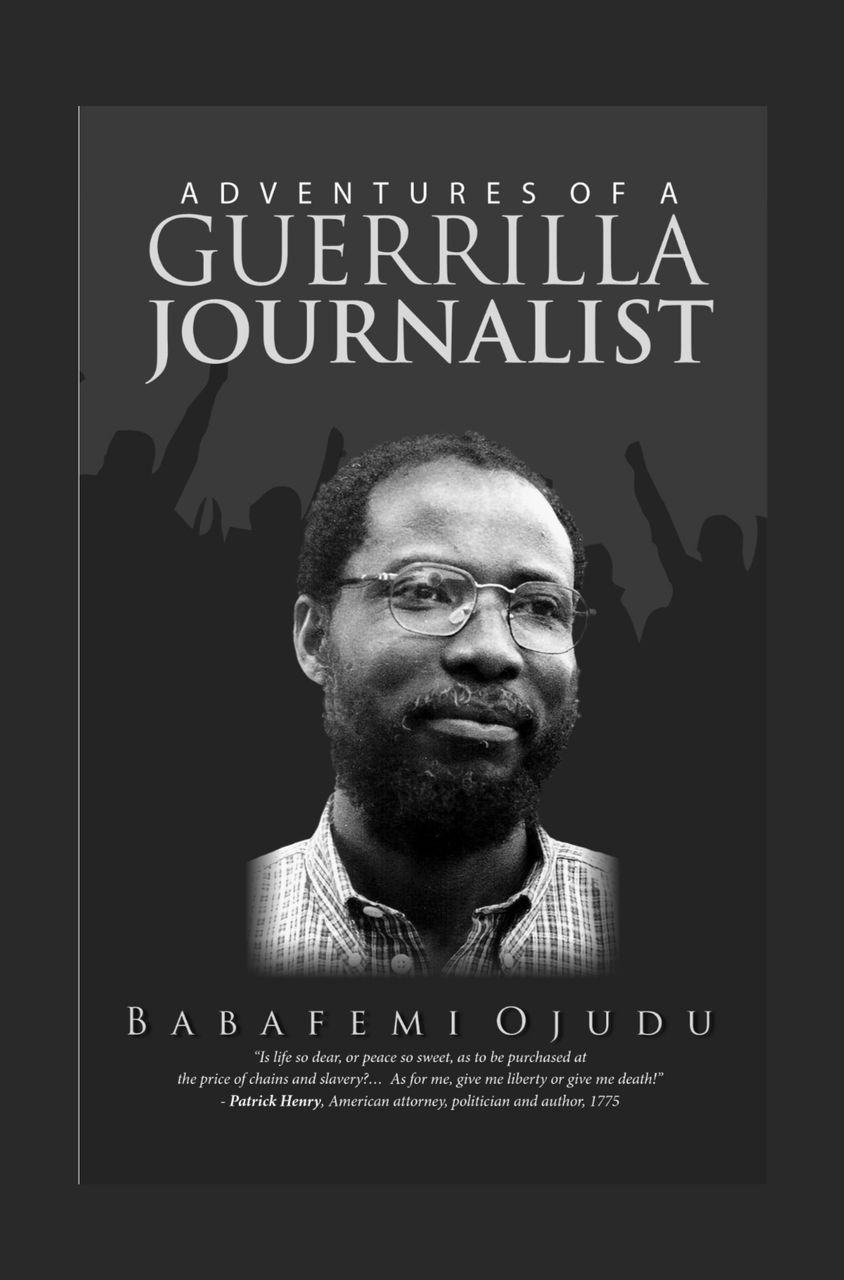
Excerpted from Adventures of a Guerrilla Journalist, by Babafemi Ojudu, a Nigerian senator. The book is published by Ojudu Babafemi and released in November 2024.