 0
 0
By Godwin Okondo
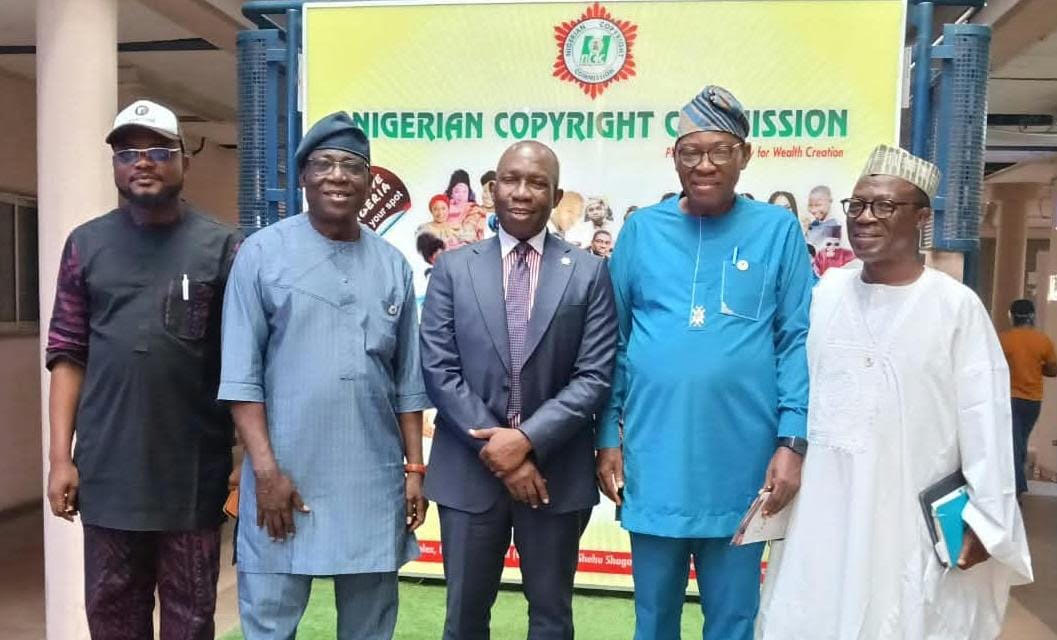
John Asein, Director-General of the Nigerian Copyright Commission (NCC), facilitated a courtesy visit of the board of Reproduction Rights Society of Nigeria (REPRONIG), to the Federal Ministry of Justice in Abuja.
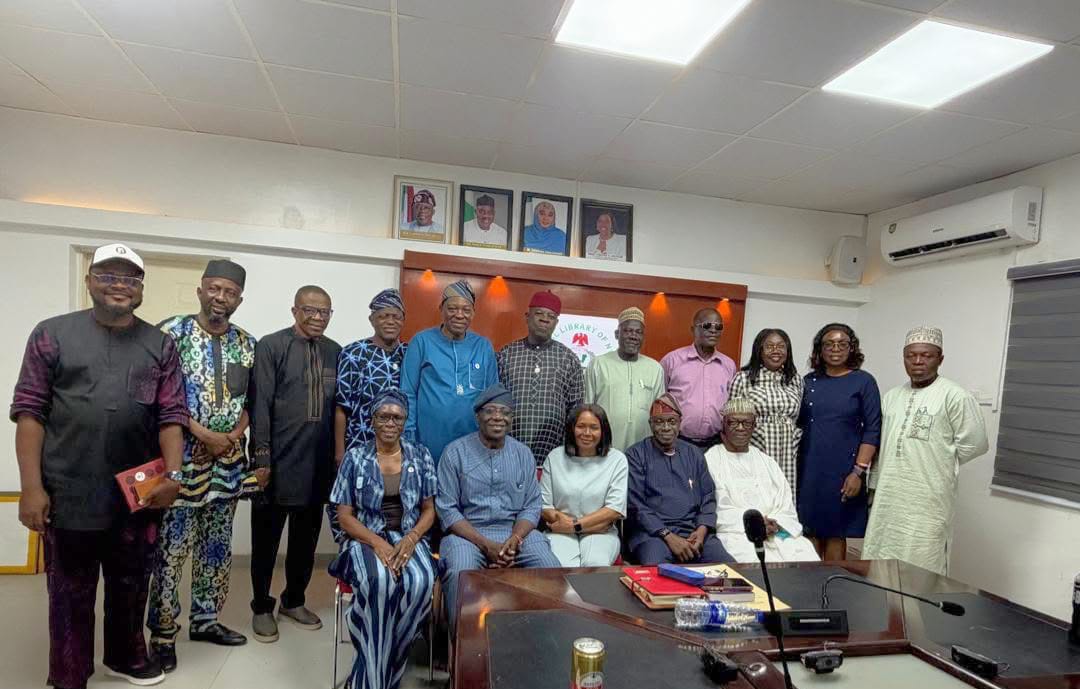
The board also visited the National Library of Nigeria (NLN)
The visits were part of REPRONIG’s efforts to strengthen institutional collaboration advance copyright protection and collective rights management and secure strategic partnership with it on licensing and copyright awareness.
Beatrice Ejodamen Jedy-Agba (Mrs.), the Solicitor-General of the Federation and Permanent Secretary of the ministry, received the delegation, on behalf of the Attorney-General of the Federation and Minister of Justice.
Gbadega Adedapo, REPRONIG’s board chairman, introduced the board members and highlighted the society’s mandate and ongoing initiatives.
The REPRONIG board described the ministry’s contributions towards the actualisation and disbursement of the Copyright Levy to eligible rights holders as a significant milestone in the country’s copyright administration framework, particularly for authors, publishers and other rights holders in the text and image-based creative sector. The initiative reinforces government’s commitment to protecting intellectual property and ensuring that creators derive economic benefits from the use of their works. REPRONIG also acknowledged the instrumental role of the Nigerian Copyright Commission in advancing the implementation of the Copyright Levy framework and reaffirmed REPRONIG’s commitment to working within the commission’s established regulatory framework in promoting the interests of rights holders.
The Solicitor-General commended Dr. Asein for his leadership and efforts in ensuring the actualisation of the Copyright Levy Order in collaboration with relevant government institutions, including the Federal Ministry of Arts, Culture and the Creative Economy. Mrs. Jedy-Agba acknowledged the enormous potential of Nigeria’s creative industry and emphasised the importance of unity and cooperation among stakeholders, observing that “a house divided against itself cannot stand”. She stressed the need for a fair, transparent and accountable framework for intellectual property administration. She expressed the government’s willingness to consider necessary regulatory reviews and amendments to enhance clarity, accountability and effective governance.
 REPRONIG said it was ready to collaborate with the ministry and other relevant government institutions, to strengthen institutional licensing, particularly across universities, polytechnics, colleges of education, research institutions and other public establishments where copyrighted materials are routinely reproduced for educational, research and administrative purposes.
REPRONIG is open to innovative ideas, constructive recommendations and strategic partnerships that would strengthen the administration of reprographic reproduction rights in Nigeria. He stressed that effective institutional licensing would promote lawful reproduction, improve compliance and ensure that authors and publishers receive appropriate remuneration for the use of their intellectual works.
AT THE NATIONAL LIBRARY OF NIGERIA, the REPRONIG Board called for stronger institutional to advance reprographic rights management, promote copyright awareness and strengthen the relationship between collective management organisations and the library community across Nigeria. The delegation was received by at the National Librarian and Chief Executive Officer, Chinwe Veronica Anunobi (Professor),., alongside members of the library’s management team.
REPRONIG said it was keen on building a strategic partnership between and the National Library and itself, particularly in strengthening engagement with librarians and the wider library ecosystem across tertiary institutions in Nigeria. He stressed the need for librarians to understand the mandate of Collective Management Organisations (CMOs), especially their role in protecting the rights of authors and publishers when their works are reproduced beyond the scope of permitted copyright exceptions. The National Library, as a critical institution within Nigeria’s knowledge and information ecosystem, could play a significant role in deepening understanding of reprographic licensing and facilitating REPRONIG’s engagement with libraries and tertiary institutions nationwide.
REPRONIG highlighted its ongoing National Advocacy and Sensitisation Programme, which has covered the six geopolitical zones of the country, reaffirming REPRONIG’s commitment to continuous stakeholder education and institutional engagement. He proposed the establishment of a joint committee comprising representatives of librarians and REPRONIG to develop practical strategies for advancing copyright compliance, institutional licensing drive and ensuring that authors and publishers, and other rights holders receive appropriate remuneration for the use of their intellectual property within the academic community.
In her response, Professor Anunobi acknowledged the importance of copyright awareness within the library profession but observed that librarians’ understanding of reprographic rights management, collective licensing and the operational responsibilities of CMOs remained limited in many institutions. She encouraged REPRONIG to take its message closer to the institutions, using practical and accessible communication approaches that address the concerns of librarians and institutional management.
She spoke on addressing questions surrounding Open Access educational resources, Creative Commons licensing and copyright exceptions under the Nigerian Copyright Act, noting that these issues require clear explanations to distinguish legitimate educational access from uses that require appropriate licensing. The National Librarian expressed its readiness to collaborate with REPRONIG in developing concrete responses to these concerns, however, emphasising the need for a sustainable and practical framework that could be adopted and disseminated across the library community to ensure consistency in understanding and implementation.
Prof. Anunobi further advised REPRONIG to explore strategic engagement with the Committee of Vice Chancellors of Nigerian Universities (CVCNU), noting that building a constructive relationship with the body would facilitate smoother engagement with university authorities and support the institutional licensing drive.