 0
 0
Ogaga Ifowodo, winner of The Nigeria Prize for Literature 2026, describes the encounter between a writer’s work and its readers as one of the most rewarding experiences of literary creation, saying that every new reading or performance can reveal meanings and emotions the author may never have anticipated.”Every writer works alone,” he said to a room full of secondary school students and others. “It’s you and your thoughts, and your muse, and you pray the muse cooperates with you. When you’ve done the work, it’s inert until a reader engages with it.”
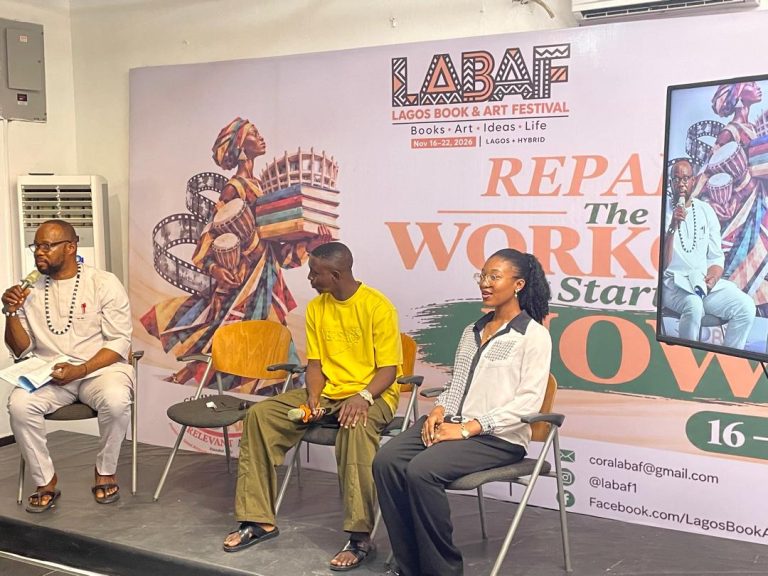
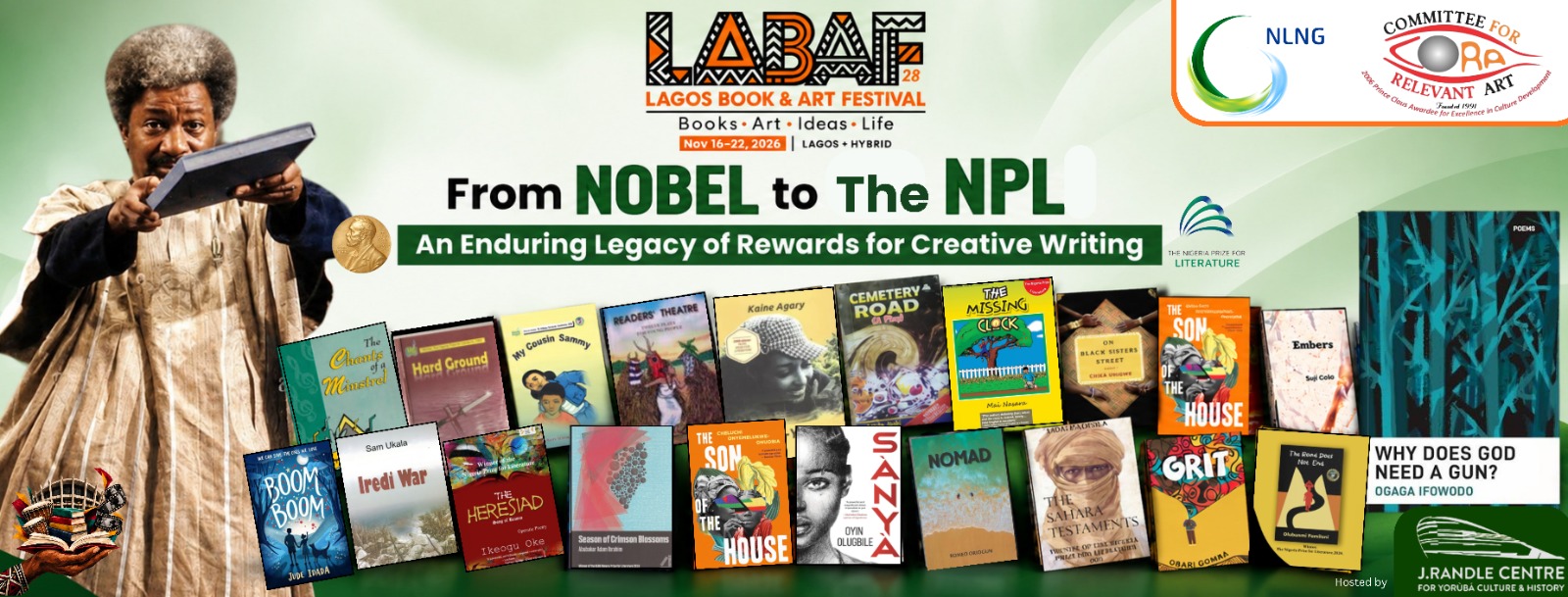
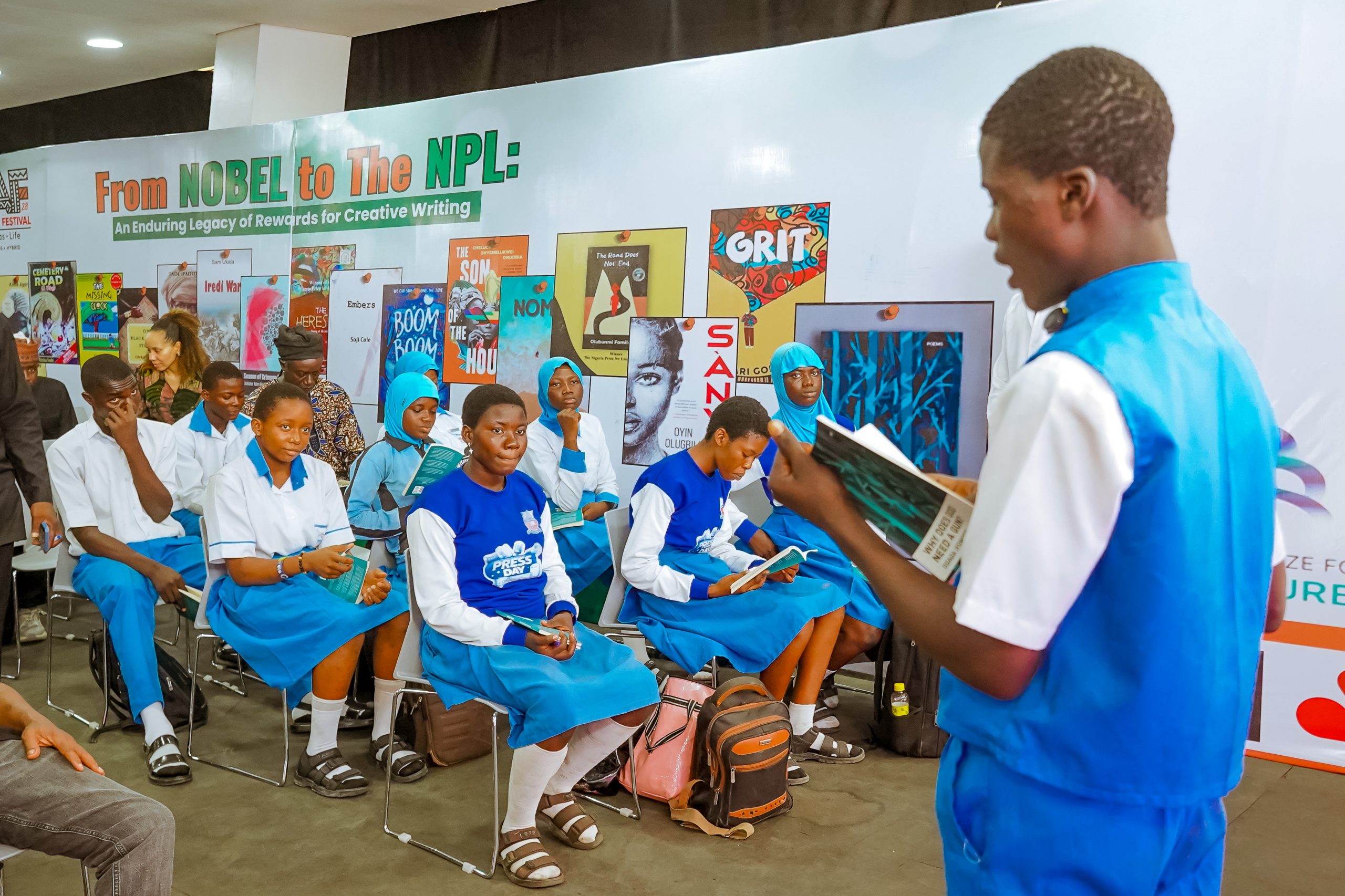
Ifowodo spoke at a conversation with young people at the Lagos Book and Art Festival (LABAF) 2026, on his prize-winning poetry collection, Why Does God Need a Gun? The session, held as part of the festival’s 28th edition at the J Randle Museum in Onikan, Lagos’ culture precinct, provided the author an opportunity to explore the ideas behind the collection, which won him $100,000 prize money, as well as the poet’s creative process, his commitment to writing and the issues that inspired his work.
The conversation turned to the central question of his winning collection, as encapsulated in his telling title, Why Does God Need a Gun?, which draws on the imagined experience of Leah Sharibu, the schoolgirl abducted by Boko Haram but who refused to renounce her Christian faith.
Asked whether he had found an answer to the question posed in the title, Ifowodo said the answer was already contained in the question.
“It’s a leading question, so I know the answer. The truth actually is, God does not need a gun. It’s a rhetorical question, whose answer is implicit in it,” he said.
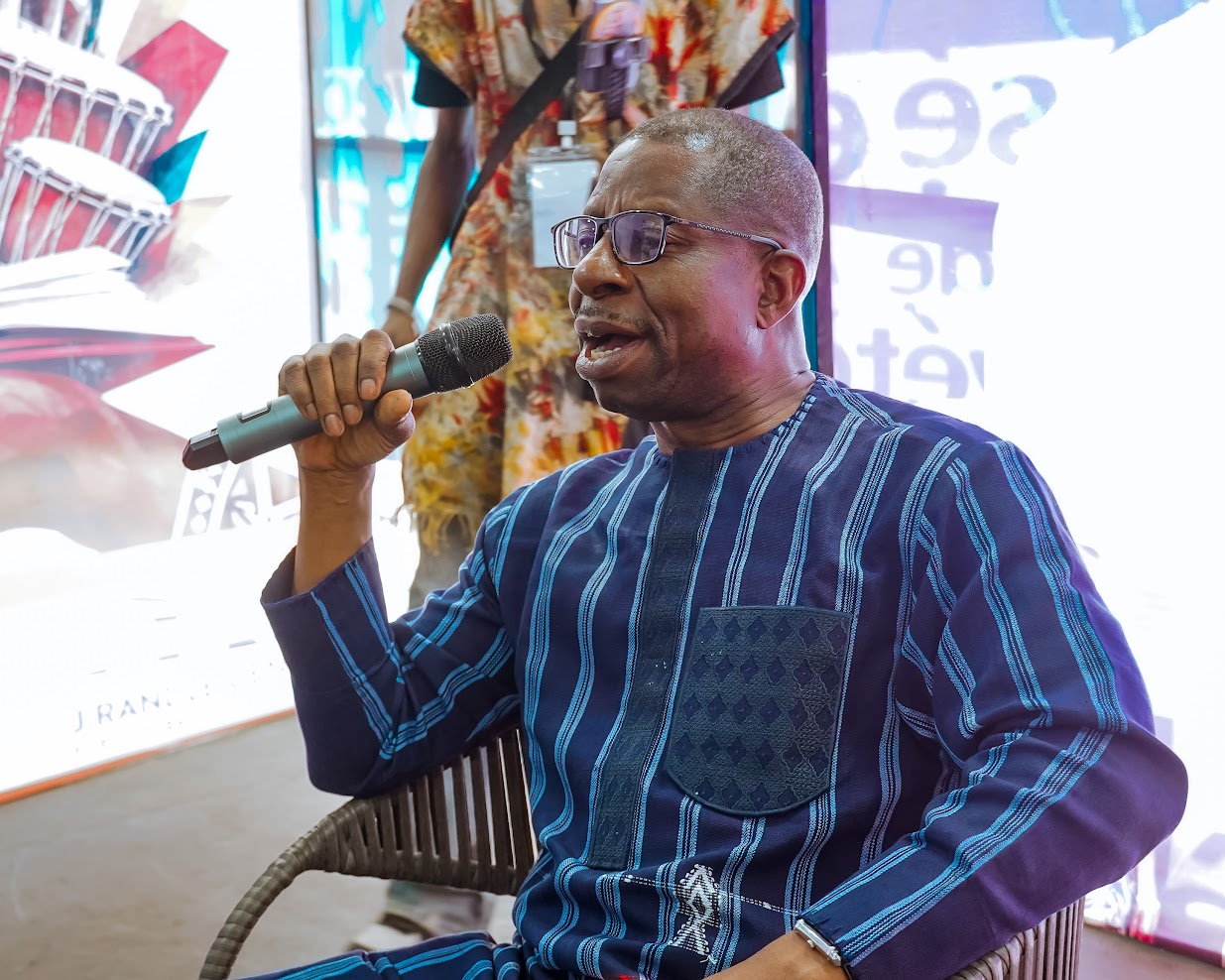 Explaining the thinking behind the entire collection, he said the question reflects the contradiction in the actions of religious extremists who claim to defend an all-powerful God while resorting to violence in his name.
He likened the question to the moral expectations children place on adults. Children, he explained, often hold firmly to the values they are taught, even when adults struggle with the complexities and contradictions of applying those values. Leah’s question challenges the apparent contradiction between her captors’ declaration that God is great and their warped belief that they need weapons to defend him.
“If you say God is great, yet you are taking up guns to become his guardian, then you are greater than him. That’s what led her to ask the question,” he said.
He added that the question exposes the contradiction in human beings claiming to protect the very God they believe created them.
“So we whom he made in his image from dust now suddenly feel we need to protect our maker,” he said.
For Ifowodo, however, the significance of Leah’s experience goes beyond the religious argument. He described her refusal to renounce her faith at a mere age 14 despite the possibility of securing her freedom, as an extraordinary demonstration of conviction.
“She is a child that has a strength of conviction at 14 to say no to being freed on the condition of renouncing her faith,” he said. “That is no longer an ordinary child, and that’s why I felt that that singular act is worthy of celebration a million times over.”
Admitting that he was unsure whether he could have demonstrated similar courage under the same circumstances, he said Leah’s response transforms her from a captive into someone challenging the beliefs and actions of her captors, stating that she has turned interrogator, and is no longer the captive at that point.
He argued that while her captors seek to diminish her, she asserts her agency through the questions she raises, presenting a powerful challenge to their understanding of faith.
Reflecting on how he felt watching other people interpret and perform his poetry, Ifowodo said writing was often a solitary experience, but a literary work only begins to acquire a different life when readers engage with it.
He described the reader’s engagement as an act of bringing the work to life, explaining that performances often introduced interpretations and emotional responses that could surprise even the author.
“When a reader engages with a work, and performs it, he’s breathing life into the work and adding to your creativity, because the reader’s interpretation of the work, how they feel about it, the emotions they express, sometimes can even surprise the author,” he said.
According to Ifowodo, a reader could discover aspects of a poem that the writer had not consciously considered, while different performances could continually open up new dimensions of the same work.
“I would say I am elated by all the performances earlier today by the secondary school students, and now, this evening, Nathaniel, and all the conversations we’ve had on the side. All of that is a delight to me,” he said.
Ifowodo acknowledged the role of the prize sponsor and organiser, NLNG, was playing in giving literary works greater visibility through its activities surrounding the award. He noted that a book could be published and even become a masterpiece, but without adequate exposure and readership, its significance might remain largely unknown.
He credited the prize’s activities, including the Book Party, the announcement of the longlist and shortlist, and the extensive media engagements across radio, television and social media, with bringing his work to a wider audience. For him, the opportunity to encounter different interpretations of his poetry had expanded his understanding of his own work and produced moments of unexpected delight.
Turning to his longevity as a writer, Ifowodo said his commitment to the craft was driven by an enduring personal need to write rather than the prospect of winning literary awards. Pointing to Nobel laureate Wole Soyinka, whose photographs featured around the festival venue as part of an exhibition marking 40 years since winning the Nobel Prize, Ifowodo observed that the older writer’s continued literary engagement remains an inspiration.
“As we are here, we are seeing photos of Wole Soyinka, who at 92, and is still writing. I still dey learn work,” he concluded jocularly in Pidgin.
He also acknowledged the influence of poet and lawyer Tade Ipadeola, who posed the longevity question and who he’d fondly called millionaire-by-writing for winning same peotry prize in 2013 with his poetry collection, The Sahara Testaments, describing him as one of the people who encouraged him to remain committed to writing.
Ifowodo, however, stressed that commitment to the craft must come before the desire to communicate a political or ideological message otherwise what comes through becomes flat and not worthy to be called literature. Although he is widely regarded as a politically engaged writer, Ifowodo maintained that literary quality should never be sacrificed for the message a writer hopes to convey.
“I am known as a very political person, but the craft is first. No matter how beautiful, stirring or revolutionary your story is, if the art fails, the message fails. So the art is the first thing,” he said.
He traced his attachment to writing to his childhood, recalling an incident involving his mother that left a lasting impression on him. He said he was about six when an uncle returned home drunk and laid hands on his mother during an argument over food. Seeing her upset, the young Ifowodo attempted to comfort her with the words: “Mother, don’t cry. Will the child not become a man?”
He recalled that the incident and the words he spoke had remained with him over the years. Veteran poet Niyi Osundare, he added, still reminds him of the moment whenever they meet, greeting him with the observation that the child had indeed become a man.
 For Ifowodo, that childhood experience was an early indication of an impulse towards activism and writing that he has never been able to abandon, describing the urge to write as a compulsion, saying he rarely found peace until he had given expression to the thoughts and feelings within him.
“It’s akin to the coal under your tongue thing. You have to say it, unless the coal will keep burning your tongue,” he said.
While acknowledging the importance of literary prizes in drawing attention to writers and their works, he cautioned against making awards the primary motivation for writing.
“As much as prizes are important, because they bring attention to the work, if your goal is to write to win a prize, just forget about it, because you are not guaranteed winning,” he said.