 0
 0

A Review of Toyin Abraham’s Oversabi Aunty
THE drama of Oversabi Aunty lies in the paradox of what virtue does and what moral life requires. The heart of the film is the character of Toun played by Toyin Abraham, a very religious woman who often has more faith in her own moral sense than she has in her ability to look at herself. Her desire to regulate the appearance of others is her driving contradiction from the church scenes, the very first in the movie. Her overriding interest in what she should wear seems justifiable on its own terms but the shame of her worshippers shows how religion can be used to shame people. Toun is more concerned about fixing their outward misalignments with her ideals than comprehending them in reality. The difference is important: morality is no longer an act of compassion, but an act of surveillance, in which Toun plays the role of the interpreter as well as the enforcer.
This character’s overbearing attitude is perfectly captured by the film’s title. When someone is “oversabi” it means that they have too much knowledge, most times to the irritation of others, as they arrogate to themselves the license to intrude into affairs, including the very ones they could have overlooked. But behind the humour is a deeper issue of certainty and wisdom. The issue is not just that Toun is interfering; it is that she deems herself totally righteous and religiously perfect by pointing out other people’s shortcomings. The moral conundrum the film reveals is a familiar one: while people might be trying to save the world, they lose the ability to look at, or save, themselves. For Toun, the vocabulary of religious observance serves as the medium through which this contradiction is maintained and she is able to mistake the form for the content of moral discipline. This paradox, again, is most significant in her family. Toun and her husband Chidi, played by Mike Ezuruonye, are a family who are spread across Yoruba and Igbo cultural identities, but their relationship is not without its problems as Toun is a controlling woman. Even their conflicts over the names they would give their children bear witness to the fact that family identity is not simply passed down, but negotiated by authority, belonging, and personal preference. Chidi is relatively placid, which contrasts with Toun’s desire for correction, but his lack of conflict can also indicate that he is not manly and authoritative enough in dealing with the challenges in his family, especially in taming his puritanical wife. The picture of marriage in the film is not only the contrast of a troublesome wife and a patient husband. It points to a home where avoiding conflict can be combined with not addressing issues that need to be addressed.
“The film’s dramatic revelations build up, sometimes overpowering the film’s psychological growth, but its central contradiction is strong. A family can pray together without building trust, a parent can preach goodness without knowing the people to whom she is preaching, a sacrifice can seem noble without being just”
But the biggest mistake that Toun makes is in how she parents her own children. She has been so invested in the image of a morally exemplary family, but she has not yet explored the private lives of the members of her family. Her children then learn to act good in her sight and hide from her the desires, decisions, and struggles that could lead to her condemnation. When she approaches them, one of her daughters hides behind the familiar motions of reading the Bible and singing hymns; the other lies about attending a Bible studies service, all pretending to be religious. The pregnancy of Temitope, as a result of a reckless bet, reveals a deeper chasm between the expectation and reality of parenthood. They are comical and shocking, in one sense and another, but more importantly they show the culture of concealment. If there is a good chance that being honest will be judged, then deception is a way to negotiate authority.
Here is where this movie needs to be critically scrutinized. Toun’s parenting does help to explain why her children hide certain things, but not all things. To suggest otherwise would make individual agency and responsibility a result of parental failure. The more convincing explanation is that the family environment does not allow for openness, but does not free the members from responsibility. The children are not just innocent victims of Toun’s meddling, nor are they merely illustrations of youthful rebellion. Their varying options point to the constraints of a family that seems to share religious values but lacks emotional trust on which those values could become meaningful in everyday life. The most disturbing aspect of this failure is Chuka’s relationship with Ada. Chuka, played by Enioluwa Adeoluwa, is portrayed as a young man whose anger is not fully understood and is viewed as a relatively well-behaved son by the family. His aggressiveness towards others, such as slapping a restaurant server, indicates that his anger is not just a psychological problem; it has consequences for people around him. The next encounter with Ada is tragic, as Chuka pushes her into an accident that results in a head injury and death. This is where the film’s humour turns darker and even more disturbing as it explores the themes of violence and denial. Chuka’s actions are not a bad thing that just happened; they are an aggressive pattern followed by a cover-up that is serious. Also, Ada cannot be made a vehicle for revealing the dysfunction of the family. The moral questions of the film focus on her death, which is the human tragedy that surrounds it, and which is more important than the embarrassment or disgrace felt by those who are left behind. It is best if the story also explains that private violence is not less grave because a family has a respectable public identity. But its dramatic fragility is that it may be too quick to go from anger to death and hiding it to allow for the psychological complexity that such a tragedy requires.
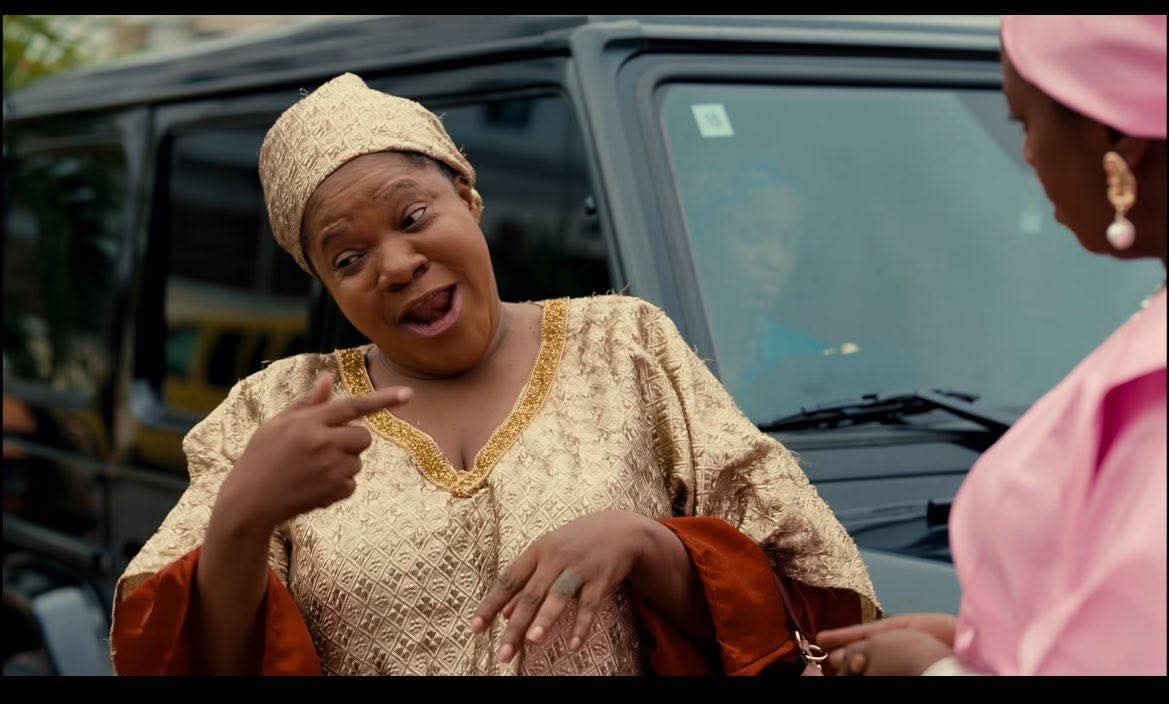 The last moral dilemma in this film is the most extreme manifestation of Toun’s paradoxes. When she realises that her son is responsible for Ada’s death, she lies to the police and confesses to the murder. Her choice is both a desperate move by a mother and the result of the culture of appearances that has been her family’s legacy. She has tried to maintain a facade of righteousness throughout the movie, and now she is guarding her son by taking responsibility for a crime she didn’t commit. The irony is that the woman who has been so adamant about the moral standards of others is ready to lie when dealing with the integrity of her own family. Maternal love is usually considered to be a protective and sacrificial love, but in this case, it is bound up in the concealment of evil.
In the end, Oversabi Aunty provides a sharp prong of respectability when it’s not accompanied by actual ethical practice. Its religious concerns are a sharp highlight, not because they are a criticism of religion itself, but because they are a warning against the replacement of religious performance with compassion, self-knowledge and accountability. Its dramatic revelations build up, sometimes overpowering the film’s psychological growth, but its central contradiction is strong. A family can pray together without building trust, a parent can preach goodness without knowing the people to whom she is preaching, a sacrifice can seem noble without being just. Toun’s tragedy is that she finds out the truth of appearances only when the ramifications of her family’s hidden truths are no longer manageable. The last thing she has to show in the theatre of holiness that she has so painstakingly tended is that her family is not perfect, but her holiness has so blinded her that they are unprepared for the truth.